Oops! AI Fails & Fixes: Steer Clear of These Common AI Goofs
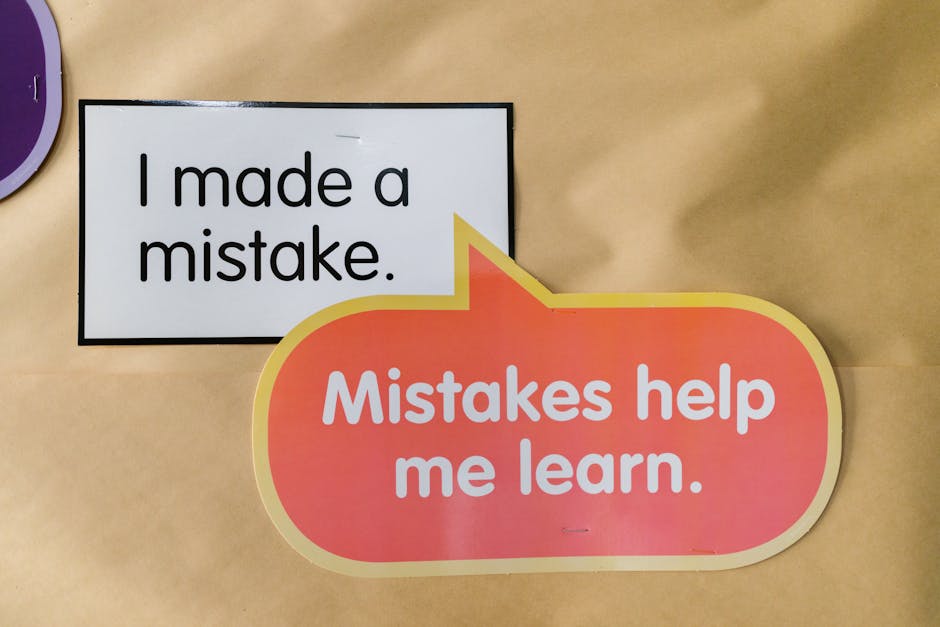
Photo by RDNE Stock project on Pexels
Oops! AI Fails & Fixes: Steer Clear of These Common AI Goofs
So, you're diving into the world of AI? Awesome! It's a powerful tool, but like any tool, it's easy to make mistakes, especially when you're starting out. Don't worry – we've all been there. This isn't about scaring you away; it's about equipping you with the knowledge to avoid common pitfalls and use AI effectively. Let's look at some "Oops!" moments and, more importantly, how to fix them. Think of it as your AI training wheels!
The Data Dilemma: Garbage In, Garbage Out (GIGO)
This is the golden rule of AI. The quality of your output depends entirely on the quality of your input data. If you feed your AI model bad data, expect bad results.
What’s the "Oops!"?
- Incomplete Data: Missing key information. Imagine asking an AI to predict customer behavior without providing data on their demographics or purchase history.
- Biased Data: Reflecting existing prejudices or unfair representations. For example, training a hiring AI solely on data from predominantly male employees might lead to it unfairly favoring male candidates.
- Inaccurate Data: Errors, typos, or outdated information. This can completely throw off your AI's learning process.
The Fix
- Data Audits: Regularly check your data for completeness, accuracy, and biases. Use data visualization tools to spot anomalies.
- Diverse Datasets: Actively seek out data from various sources to ensure a balanced and representative dataset.
- Data Cleaning: Dedicate time to cleaning your data. Correct errors, fill in missing values (where appropriate), and remove duplicates.
Overfitting: When AI Gets Too Attached
Overfitting happens when your AI model learns the training data *too* well. It becomes so specialized in that specific data that it performs poorly on new, unseen data.
What’s the "Oops!"?
- Perfect Scores on Training Data, Poor Scores on New Data: This is a classic sign. Your AI aced the test but fails in the real world.
- Ignoring the Bigger Picture: The model focuses on noise and irrelevant details instead of the underlying patterns.
The Fix
- More Data: Often, simply increasing the amount of training data can help prevent overfitting.
- Cross-Validation: Split your data into training and testing sets. Train on one, test on the other. Repeat this process with different splits to get a better sense of how your model will perform on unseen data.
- Regularization: This technique penalizes overly complex models, encouraging them to find simpler, more generalizable patterns.
- Simplify the Model: Sometimes, the solution is to use a less complex model. Start simple and increase complexity only if needed.
Ignoring Explainability: The "Black Box" Problem
Many AI models, especially complex ones, can be like black boxes. You get an output, but you don't know *why* the AI made that decision. This lack of transparency can be a problem, especially in sensitive applications.
What’s the "Oops!"?
- Uncertainty in Decision-Making: You can't confidently explain why the AI made a particular prediction or recommendation.
- Difficulty Debugging: If something goes wrong, it's hard to figure out the root cause.
- Ethical Concerns: Lack of transparency can raise ethical concerns, especially if the AI is used to make decisions that affect people's lives.
The Fix
- Choose Explainable Models: Some models are inherently more explainable than others. For example, decision trees are generally easier to understand than deep neural networks.
- Explainable AI (XAI) Techniques: Use techniques like feature importance analysis or SHAP values to understand which features are most influential in the AI's decision-making process.
- Document Everything: Keep detailed records of your data, model architecture, training process, and performance metrics.
Over-Reliance: Treating AI as a Magic Bullet
AI is a powerful tool, but it's not a magic bullet. It's important to remember that AI is only as good as the data and algorithms it's based on, and it's not a replacement for human judgment.
What’s the "Oops!"?
- Blindly Trusting AI Output: Accepting AI's decisions without critical evaluation.
- Ignoring Human Expertise: Failing to leverage human knowledge and experience to validate or refine AI's outputs.
- Thinking AI Can Solve Everything: Trying to apply AI to problems where it's not the right solution.
The Fix
- Human-in-the-Loop: Implement a system where human experts review and validate AI's decisions.
- Critical Thinking: Always question the AI's output and consider alternative explanations.
- Strategic Application: Carefully consider whether AI is the appropriate solution for a particular problem. Focus on areas where AI can augment human capabilities, not replace them entirely.
Neglecting Security and Privacy
AI systems can be vulnerable to security threats and privacy breaches. It's crucial to protect your data and models from unauthorized access and misuse.
What’s the "Oops!"?
- Data Breaches: Sensitive data falling into the wrong hands.
- Model Poisoning: Attackers manipulating the training data to cause the AI to make incorrect predictions.
- Privacy Violations: Collecting or using data in a way that violates privacy regulations.
The Fix
- Data Encryption: Encrypt sensitive data both in transit and at rest.
- Access Control: Implement strict access controls to limit who can access your data and models.
- Regular Security Audits: Conduct regular security audits to identify and address vulnerabilities.
- Privacy-Preserving Techniques: Explore techniques like differential privacy to protect the privacy of your data subjects.
The world of AI can feel overwhelming, but remember that every expert was once a beginner. Avoiding these common "Oops!" moments will put you on the path to using AI effectively and responsibly.
If you're looking for a private way to manage this, check out KDS Gaming - a hub for indie games and streams, offering a private space for community building and resource sharing.
Pro Tip: Start small! Don't try to tackle everything at once. Pick one area where AI can make a real difference, focus on doing it well, and then expand from there. Good luck!


Comments
Post a Comment